Barn re-roofs, grain stores, livestock buildings, machinery sheds and equestrian arenas. We work around your farming calendar — not against it.
Farms can't be re-roofed on a generic eight-week programme. Grain stores need to be empty — or full and untouched. Livestock buildings can't lose their roof in February. Equestrian arenas can't have a 30-tonne MEWP parked outside the school during competition season.
Forty years of doing this across the South-East has taught us to read the farming calendar like our own. We've re-roofed grain stores in the three weeks between harvest finishing and drying starting; we've sheeted machinery barns while combines were parked underneath them; we've replaced asbestos roofs on dairy units over weekends so the herd never moved.
Our agricultural clients include mixed arable estates, dairy farms, beef and sheep enterprises, soft-fruit growers, equestrian yards, vineyards, contracting businesses and rural landlords. From traditional Kentish oast houses to 60-metre clear-span machinery sheds, we've roofed them all.
Insulated and ventilated roof envelopes that hold storage temperature, keep moisture out, and let the dryer do its job. Phased works to fit the harvest window.
Dairy parlours, cattle yards, lambing sheds, pig units, poultry houses. Ridge ventilation, anti-condensation liners and rooflight pitches sized for animal welfare.
Single-skin box-profile cold roofs for general machinery storage. Robust, fast to install, and economical — the working farm's bread-and-butter roof.
Indoor schools, American barns and traditional yard stables. Translucent rooflight panels for natural daylight, anti-glare arena pitches, all-weather access planned for events.
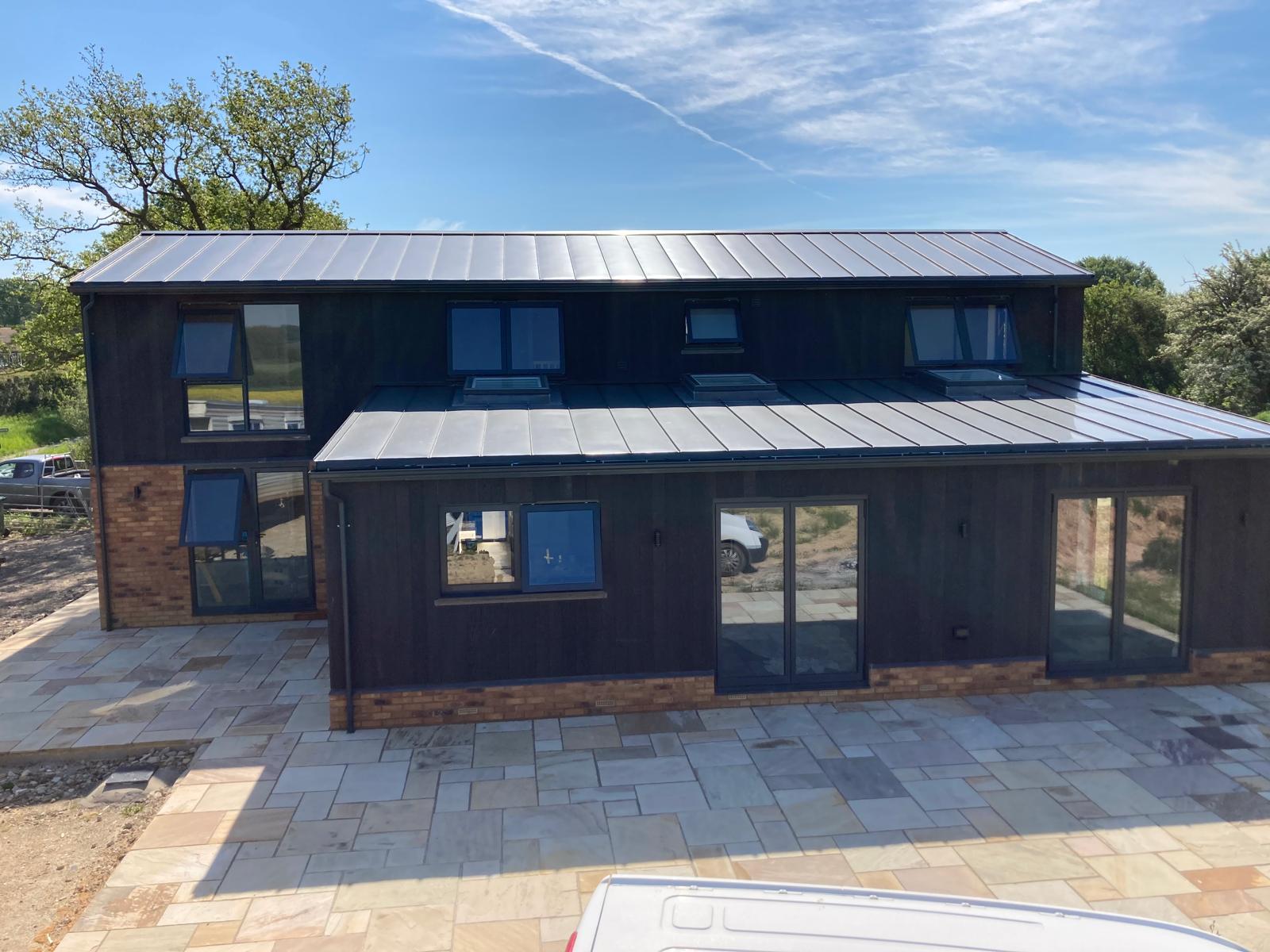
Diversification schemes where redundant traditional or steel-frame barns are converted to commercial, residential or holiday-let use. Standing-seam, slate-effect and zinc finishes.
Roof and gable sheeting for commercial soft-fruit and ornamental glass — in conjunction with specialist glaziers.
Covered slurry stores and muck heaps with corrosion-rated PVDF coatings to handle the gases. Compliant with current Farming Rules for Water (England).
Farm workshops, packhouses, milling and processing buildings. Often combined commercial-grade insulation with agricultural-budget pricing.
Most pre-2000 farm roofs are asbestos cement. We're for full strip and disposal, and we'll quote strip-and-replace as a single combined project. See our asbestos removal page →
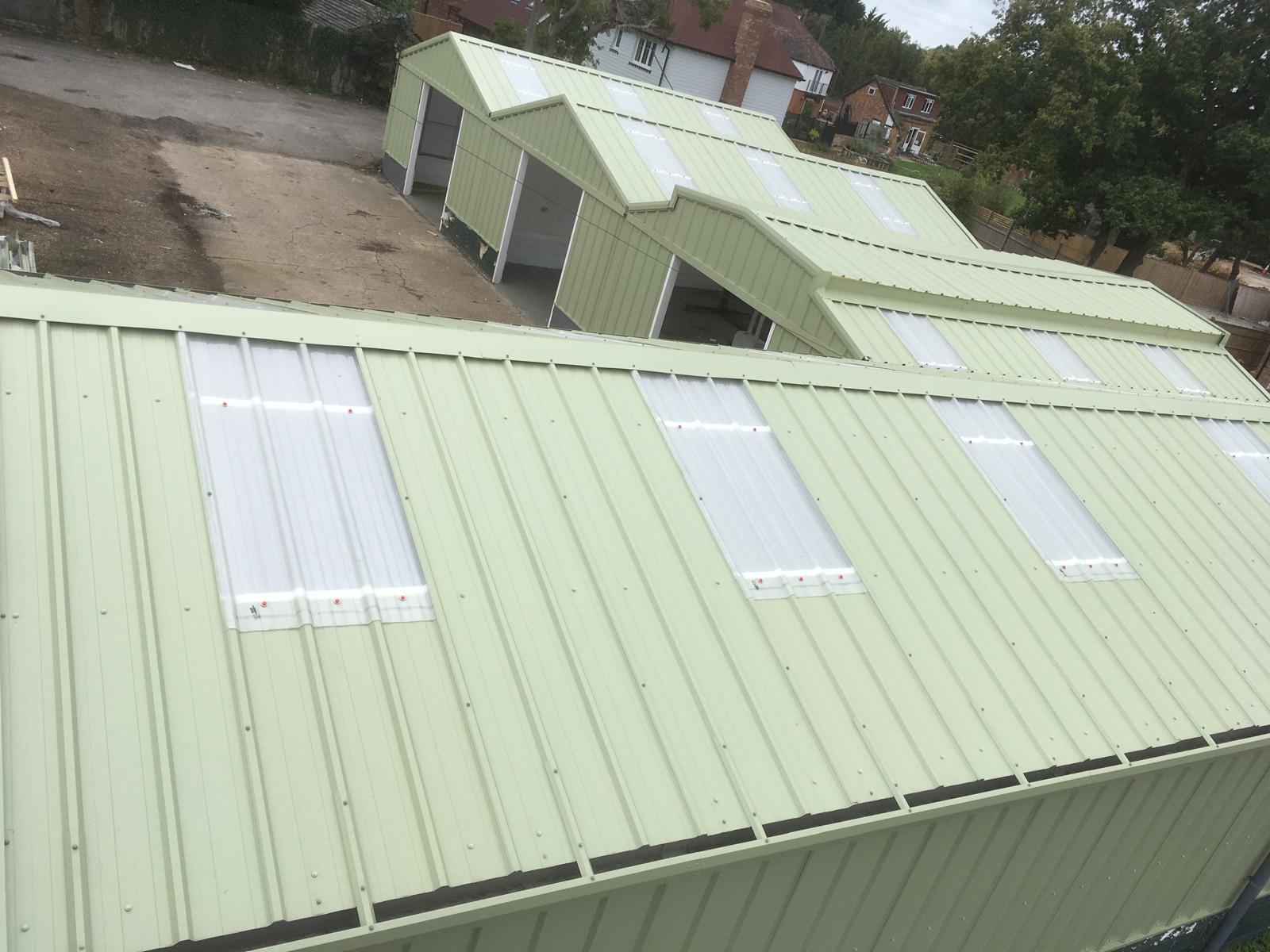
Agricultural roofs face conditions most commercial roofs never see — ammonia from livestock, abrasion from straw and grain, mechanical knocks from machinery, and a 30-year life expectation on a 15-year budget. The choice of sheet matters.
We programme around harvest, calving, lambing, drilling and trade events. Survey-stage conversation, written into the contract.
Single-track lanes, soft yards, livestock movements. We know how to get a 28-tonne MEWP onto a working farm without churning the place up.
We can help with quotes for Farming Investment Fund, Slurry Infrastructure Grant and Countryside Stewardship roof-replacement applications.
For cattle and sheep buildings — typically yes, with phased works and safety netting fitted from below to protect the animals from falling debris. For dairy parlours and milking sheds we usually need a half-day shutdown window. For poultry units we'll usually need a between-flocks slot. We'll talk it through at survey.
Yes — we handle the strip, the wrap, the disposal and the air clearance in-house. You receive consignment notes for tracked waste and a certificate of reoccupation. No need to engage a separate asbestos contractor. See asbestos removal.
Several recent and current schemes (Slurry Infrastructure Grant, Farming Investment Fund, Countryside Stewardship Capital Items) can fund roof works tied to specific outcomes — covered slurry, rainwater harvesting, livestock welfare. We're happy to provide grant-friendly quotes broken down by item. Grants change frequently; always confirm current eligibility with your Defra advisor.
Plastisol-coated profile: 25–30 years. PVDF-coated profile: 35–40 years. Modern fibre cement: 50+ years. The single biggest factor in roof life on a farm is condensation/ventilation — we'll specify ridge vents, eaves vents and anti-condensation liners that actually solve the problem rather than just shifting it.
We work across all of Kent, all of East and West Sussex, and all of Essex. We routinely cover Surrey, parts of Hampshire and the London green-belt fringes as well. Call us with your postcode and we'll confirm.