Tunbridge Wells and its surrounding villages have a different building stock to the rest of Kent — less giant warehousing, more small light-industrial units, mews offices and older commercial buildings tucked behind the town centre. We've been repairing the profiled-metal and standing-seam roofs on those buildings for four decades.
Commercial roofing work in Tunbridge Wells is concentrated in a few distinct pockets rather than one big industrial zone. The A21 corridor running north through Pembury and Southborough has a string of trade-counter and light-industrial units, Paddock Wood (TN12) further north along the same road hosts a substantial cluster of food production and distribution sheds, and the older Eridge Road and North Farm estates carry a mix of motor trade, builders' merchants and storage units. Add in the retail, hospitality and small office stock around the town centre and you've got a varied repair workload — very different roofs from one job to the next.
The repairs we see most often around Tunbridge Wells are leak tracing on small twin-skin units where the building has been extended in phases (every junction between old and new roof is a potential weak point), and standing-seam panel repairs on the more recent Paddock Wood food-grade sheds where mechanical damage from FLT and shelving operations is common. The town's tree cover — not something most industrial estates have to deal with — means leaf-blocked gutters and moss-staining on north-facing slopes also fill the diary in autumn and winter.
From our Kent base, Tunbridge Wells is around 40 minutes via the A26 or A21. We don't charge mobilisation or travel time on TN postcode work, and for established clients we'll generally turn around a survey visit within the same working week.
Buildings that have been extended in stages leak at the junctions. We map the build sequence and pinpoint the failed lap, kerb or flashing.
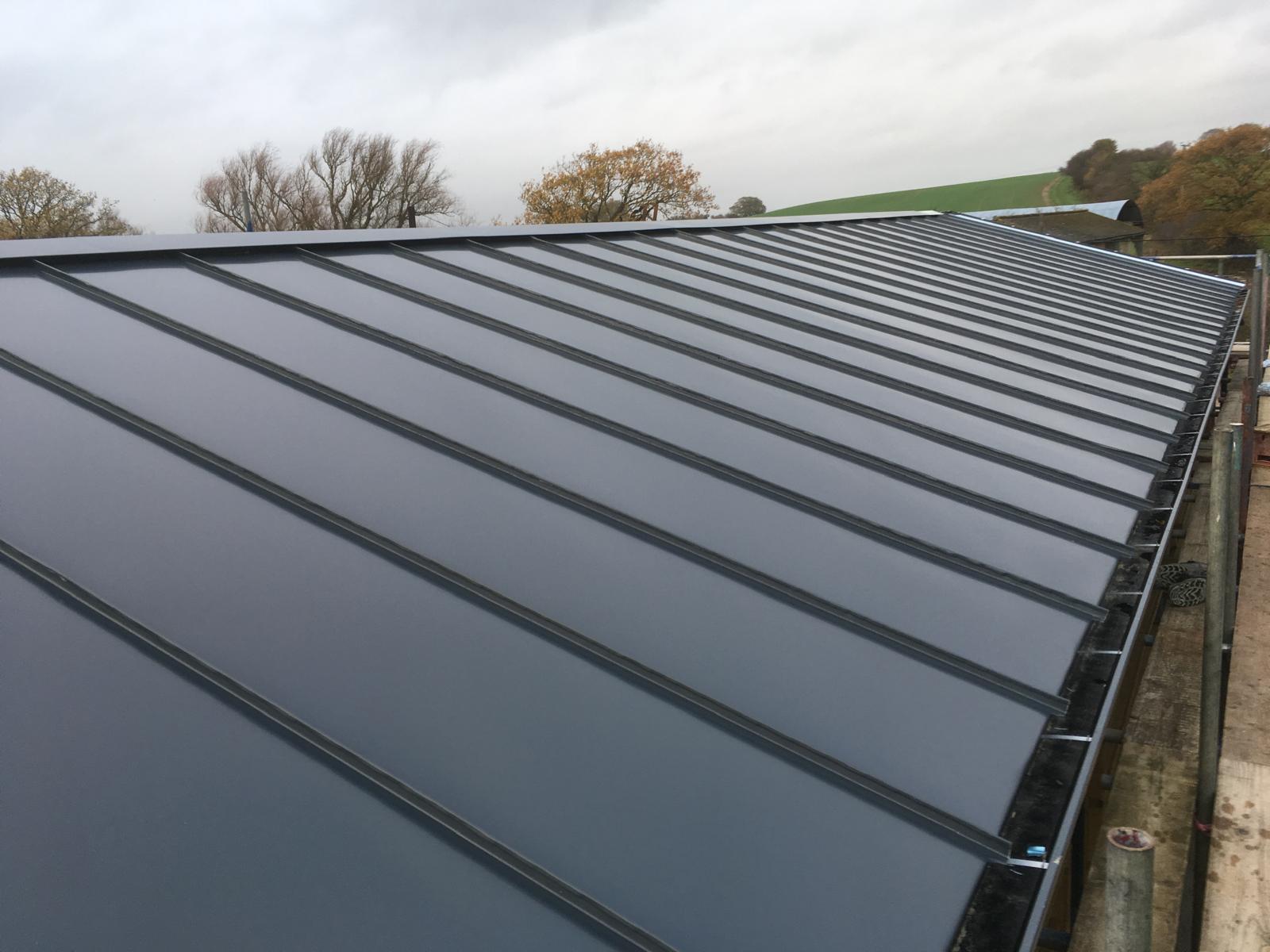
Mechanical damage and clip failures on modern Kingspan / Kalzip / Tata-style standing-seam systems — common on the Paddock Wood food sheds.
Tunbridge Wells has more tree cover than most Kent commercial areas. Blocked, overflowing and corroded gutters are a year-round repair line.
Paint shops, MOT centres and bodyshops along the A21 and around North Farm. Insurance-driven sheet replacement on aged single-skin roofs.
Old GRP rooflights on Pembury and Southborough light-industrial stock — swap for non-fragile triple-skin rated to ACR[M]001.
Older mixed-use commercial buildings around the town centre often have flat-roof-to-pitched-roof transitions where flashings have failed. We repair both sides.
"We're a small business on a trade park just off the A21 in TN2 and frankly most contractors don't want to know about a unit our size. New-Cladd came out, looked at our leaking valley properly, gave us a written quote with photographs the same week, and were back doing the work a fortnight later. No fuss, no upselling, and the rain finally stopped coming through the office ceiling."
TN1, TN2, TN3, TN4 (Southborough), TN11 (Tonbridge / Hildenborough), TN12 (Paddock Wood, Marden) and the rural TN postcodes south toward the Sussex border. We also cross into RH and BN postcodes regularly.
Around 40 minutes from our mid-Kent base via the A26 or A21, depending on traffic. We don't add travel time or mobilisation onto TN postcode quotes — it's standard local-rate pricing.
Yes. Plenty of our Tunbridge Wells work is half-day or one-day repairs on small light-industrial units where larger contractors won't quote. Minimum charges are low and we'll always provide a fixed written quote.
Where access constraints require it — particularly retail and hospitality roofs — we'll schedule out-of-hours work. There's usually a modest uplift for evening or weekend shifts but it's transparent on the quote.
Yes. Storm damage, impact damage and water-ingress claims — we provide loss adjuster-friendly survey reports with photographic evidence, scope of works and itemised costs.